Jack Palmer's Blog
  • Week 21

    This was, weirdly enough, the first lecture I have been able to physically be there for, which was nice for sure, but it does kind of feel like being dropped right into it even though I’ve been trying to be attentive to what is going on. Regardless, the class was mostly talking about a text from a prior week called “Glitch/Failure: Constructing a Queer Politics of Listening” which is a Journal by Andrew Brooks. I can’t say I got much out of it to be fair, not that I don’t understand it or anything it’s just that the ideas never really lingered. It does kind of make sense though as to why Queer spaces I am in tend to have more openness to alternative medias and more esoteric musics, but I guess it feels kind of obvious even without much theory, but maybe it is a product of me already being a part of these spaces myself that I feel that way, I don’t know.

    The second half of the class was spent enjoying Supercollider, which I have had minimal experience with prior due to friends trying to show me how to use it a couple years back, but with this being more of a “teaching the absolute basics” than prior, where friends were trying to just throw me straight into making a track kind of, I found getting fixated on mouse position-based chords really beautiful, and spent most of the class making sine chords. Very wonderful.

    I have nearly finished the Alan Licht book, I am not such a fast reader but I guess the constant back and forth on the train is a good motivator. I downloaded a lot of Alan Licht albums as well to get myself in that headspace of not only appreciating Alan’s historical recounting of the ideas but also appreciating how these ideas translate into his own practice through his approach to guitar. It feels like an apt way to read it, fully absorbing myself in the language and sound of a person, which is kind of funny, prioritising the author over the topic which he is giving a pretty impartial view on and seemingly trying to remove himself from. For certain though, the later parts of the book have been teetering off into what I feared the book would be, which is purely just a constant stream of naming things without much further depth than just naming them, and the section about No-Wave which is very briefly justified under the term, as Alan Licht’s definition of Sound Art can be vaguely summarised as Sound made by Artists, which No-Wave also was a movement of. Anyway, some more choice quotes;

    Brian O’Doherty – “A music that has a surface constructs with time. A music that doesn’t have a surface submits to time and becomes a rhythmic progression.”  Pg 136.

    I don’t have much to add other than the description of rhythm being a submission to time, it is quite beautiful imagery.

    “Wolf Vostell’s de/collage music” focused on “all noises which are propagated when a form is destroyed,” claiming that all that is left of the form in the wake of the destruction is the sound. Indeed, he did a version of Satie’s Furniture Music in which he smashed the furniture; and in the piece Kleenex he smashed one hundred lightbulbs.” Pg 148.

    Most of the things I wrote down are kind of less to do with a topic, more just things I would like to know more about, and I am very surprised that Wolf Vostell has never been mentioned to me, as this work seems very aesthetically aligned with Gx Jupitter-Larsen’s and some of The New Blockaders’ work in that it is creation of art using documentation of or remnants of entropy and creation of joyous noise. Basically, this demands further research after I finish reading this!

    “Dennis Oppenheim did one untitled performance (1971) in which he placed a dead dog on top of an electric organ, which would theoretically produce sound by holding the keys down with its weight until its body deteriorated into nothing.” Pg 151.

    I guess this is a different means to a similar ends as the prior work, being that as sound as a document of entropy and the focus on impermanence and duration, this in more stark, visceral means which I do appreciate. I did however kind of talk about this topic in the audio paper we did last term, so I don’t really want to repeat the same thing through different wording, but I guess duration could be seen as an enemy of sorts for a sound work which could be explored for the “issues in sound arts” prompt, and a suitably long / loop based work could be used to explore the durational means.

    It is becoming quite clear now – especially as this is the only class I have been able to attend so far and it is the last before the spring break – that I am quite far behind where I should be at, as it was mentioned that after the break we should have a 1k – 1.5k word draft of our essay ready to submit, and I still haven’t got a topic nevermind started the essay. Reading this book has kind of set me in a good mood to explore things I already enjoy more inquisitively though, and I think a lot of what I enjoy I still find confusing as to what is appealing psychologically rather than purely sonically, so maybe similar to what Alan has possibly accidentally done, maybe I could illustrate my own aesthetic ideals and influences in art by narrating some of its lineage.
  • Week 22

    This week I got out another book from the library after finishing Alan Licht’s, this one being less sound-oriented and more general to the arts, called Aftershock: The Ethics of Contemporary Transgressive Art by Kieran Cashell. This was because of some ideas generating over the break concerning Noise and what I consider an issue, going back to an older idea regarding the Harmful aspect of it but also thinking about the aesthetic interplay between the Harm of the sound and the Harm portrayed aesthetically, with a lot of the 90s American Harsh Noise and more distinctly and ironically classic Power Electronics material being fully absorbed in aesthetics of harm, opting to use extremely violent imagery and mean spirited lyrics, samples, themes, etc, which are kind of integral to the genre. I guess I am just wanting to explore what the effect of fully absorbing a work in moral reprehensibility (which is an obvious “issue”) actually achieves within a work, and reading about the ethics of definitely more well-known works will ideally help me apply similar standards to the works I hold to a high standard even now.

    Again, it feels pretty awful being noticeably behind where I should be at, with this week being the deadline for us to hand in the essay drafts to get feedback on, but I guess I am becoming more content that I just work slower than I would like to / am expected to. But I feel like writing about Power Electronics should be interesting, the only book I have that is strictly on the subject is suitably baffling and ridiculous (Fight Your Own War), as it is an oral history kind of book based on Zine Culture aesthetics, so some chapters offer actual history and insightful perspectives and some offer entirely self-absorbed or uninformed kind of journalistic “empty takes”.

    So far the book has been quite interesting, the first chapter after the introduction and thanks is about Richard Billingham’s photo series Ray’s A Laugh, a documenting of his family situation in a council flat (and a sound connection is made with it being related to Pulp’s track Common People) as a response to the middle class fetishisation of middle class lifestyles by documenting raw reality. The work itself is interesting, I had heard of it briefly before but I enjoy what is extrapolated from the work more than the work itself;

    “Lewis draws our attention to the perplexing image of Ray crashed out on the lavatory floor right beside the freshly stained toilet bowl. He comments : “One might notice that Billingham chose to photograph the old man and then publish the photograph, rather than immediately picking him up and cleaning him off. One might ask why he chose to do that, and what it implies.” Pg 23.

    This is always a question that is present in morally difficult work I feel, especially with “harsh reality” kind of material, what is the person’s intent doing this and at what point is the threshold of exploitation, with this example being that the decision to photograph rather than immediately help implies something voyeuristic about the photographers approach to his family, or that with that in mind how much of this voyeuristic attitude can be applied to an audience and how much is ingrained into the role of a photographer, or recordist, documentarian etc. How much does involvement matter, how much does the approach of a “fly on the wall” and human detachment lean into exploitation of the subject? I think I particularly like this idea in the context of Power Electronics because I feel like the genre has a default mode of hostility toward a subject, the inclusion of the most mundane things would be interpreted with this framework because the perspective taken is most often that of a perpetrator or stalker, kind of revelling in the moral disgrace of the voyeur ambiguous recordings have as a means of creating a more hostile listening environment.

    “…This pro-intentional view enables him to argue, like Gaut, that if a work fails to invoke the moral response intended by its producer, this constitutes “a failure in the design of the work, and therefore, is an aesthetic failure”.The example he uses to illustrate this thesis is instructive. Bret Easton Ellis’s novel American Psycho is aesthetically compromised, he argues, because the author’s intention that the work be interpreted as a satirical critique of the 1980s yuppie culture Reaganomics failed aesthetically because readers were unable to reprocess the lurid and baroque descriptions of the protagonist’s serial murders in ironically detached satirical terms.” Pg 31.

    This interpretation of art is interesting, I don’t think it’s entirely correct but it draws on something mentioned earlier in the introduction to the book, with something deemed classically “aesthetic” is to be appealing through disinterested gaze, which I interpreted as being having a surface level appeal to the work that doesn’t need to be dug into to “get”. The argument is made that transgressive art is the antithesis to this, it gives the audience something immediately unappealing that becomes more appealing with more time spent with it, thinking about or engaging with it, but this view kind of strikes a balance between the two. It offers that work can be “aesthetically compromised” if the intention becomes too masked by, in this case, its “transgressive” element, where the extreme violence overshadows the subtext and the “point” is smothered. I find this with a lot of Power Electronics, funnily enough, with the more late Whitehouse inspired work that deal more with “researched topics” such as Martin Bladh’s work related to classical theatre, 2000s Sutcliffe Jugend poetry based works, Con-Dom’s work related to T.E Lawrence, the medium chosen’s absolute prioritisation of “extremity” destroys nuance and desires “blood”, and audiences will often not take away the nuance as much as they take away from its strength.

    This is just what I kind of extrapolated so far from the book, the wording of it is quite fun in that it is very bound to classical philosophy (which is obvious because of the subject of the book being “ethics,” of course), but I am basically completely unequipt with a majority of these ideas but it isn’t frustrating weirdly, kind of exciting since it is still penetrable. The only thing I am missing is how to integrate practice into the work, since the practice is supposed to inform the research and vice versa, if my topic is to be Power Electronics then it would make sense to make a Power Electronics track myself to articulate its inner workings, but in my mind that would be asking too much of the person marking the work and a little ridiculous, possibly embarrassing. I will keep reading though and see if this is still working.

  • Week 23

    Spending more time trying to absorb myself in this work, I think I feel like I have a more solid grasp of what I want to write about, and it is kind of funny to me that I am going to be writing about Power Electronics since it is going to likely set myself up for failure as proper “analysis” of it is kind of missing the point I feel like (or at least for the majority of it), but that is appealing to me to be fair, that idea of treating something with an antithecal approach to what is intended, and I’ve written about Harsh Noise Wall prior which is even more knowingly absurd to take that position with. Anyway, the goal I have decided on is to demonstrate how Power Electronics’ prioritisation of extremity and “harm” aesthetics creates a hindrance to works that seek to tackle more earnest, researched subjects, by either the classic self sabotaging method of morally ambiguous presentation (with the artist acting as if the work is non-representative of their own belief, and that it is simply “presenting things as they are”) that can be seen as “muddying the water” of its ethics – as seen in Whitehouse and Nicole 12 who’s hands off attitudes to the morality has backfired with the artist’s statements incriminating them and removing the benefit of the doubt for many that PE audiences often have. Another hindrance is made purely through the sonic quality of the work’s insistent violence similarly having a masking effect to the artist’s intention as was demonstrated in the last blog regarding American Psycho, which’s use of excessive violence masked the artists’ intention of the work being a satire of the 80s, and brought it closer to sensationalist violence. I think this is especially apt after remembering an interview with extremely (and justifiably) controversial artist Mikko Aspa regarding Nicole 12, and how strangely well versed and “artistically minded” he was about a project that has cheap shock written all over that has given it a genuinely vile reputation for its cover art and themes. I think this is pretty common for Power Electronics though; it always had the appeal of being the complete opposite of what this course strives to be, just kind of mindlessly trampling over extremely sensitive topics with the least grace imaginable. I have been stressing over whether or not it is a sensible topic to cover. Still, I think from a more detached perspective, it might be interesting to tackle something as difficult as this. Still, it is also extremely intimidating, the likelihood of overstepping is probably too far, but also, it seems too in line with what I’m reading right now to just move on from really.

    The chapter in this Aftershock book as well helps build a vocabulary around this kind of work;

    “Sometimes actually reduced to lists of names – as if biblical incantation were enough for the canonic defence to achieve its hypnotic effect – the most compelling aspect of this quantitative strategy is that it reveals a telling anxiety on the part of the critics who employ it. Compulsively cramming as many references as possible into a small vacuum of potential structure, the hope is that some relevant theoretical link will eventually be uncovered that contributes meaning to this work that they fear may be meaningless.” Pg 98.

    The appeal to its history to justify morally abhorrent work is not only extremely apt to what I am covering, visibly making art critics panic about a work is I guess amusing and I like this chapter’s kind of apparent dislike of both the art critics’ writing of the work and dislike of the Chapmans’ art coming through a bit despite the demeanor being relatively kept impartial.

    “Because aesthetic defences are exploited to justify or vindicate the ethical status of morally problematic works like Zygotic Acceleration, this doubly transgressive art cannot be defended on aesthetic grounds; and because it is iconic, obvious, banal and severe, this sculpture makes a literal, if extreme, moral statement.” Pg 122.

    This kind of illustrates the appeal of Power Electronics also in that, because of the immorality of the presentation, it prioritises evoking an extreme reaction at the behest of the aesthetic appeal. What I am skirting around a little, though, is how I can illustrate or explore any of this through practice, so I decided to start working on an idea for what my audio work could be relative to the Power Electronics centric topic.

    My concept is to create an atomised version of Power Electronics, with the approach I take with my own Drone Noise work with granular effects used to inform the sound design for a Power Electronics track, that does everything it is supposed to within its traditional context. The only issue at the moment is that I am in the process of moving out, meaning most of my gear is back home and unusable, so I have instead taken the somewhat blasphemous approach of making the basis for the work on laptop (which I mean isn’t entirely unheard of, groups like Cathode Terror Secretion and even some modern Sutcliffe Jugend uses it).

    I spent a while on a patch that has enough going on that I don’t have to do many overdubs as to prioritise the ‘liveness’ of the work, which I did a take with to work out how to structure the track with but it was missing something, so I think I’m going to re-record next week playing the output through an amp or through tape.

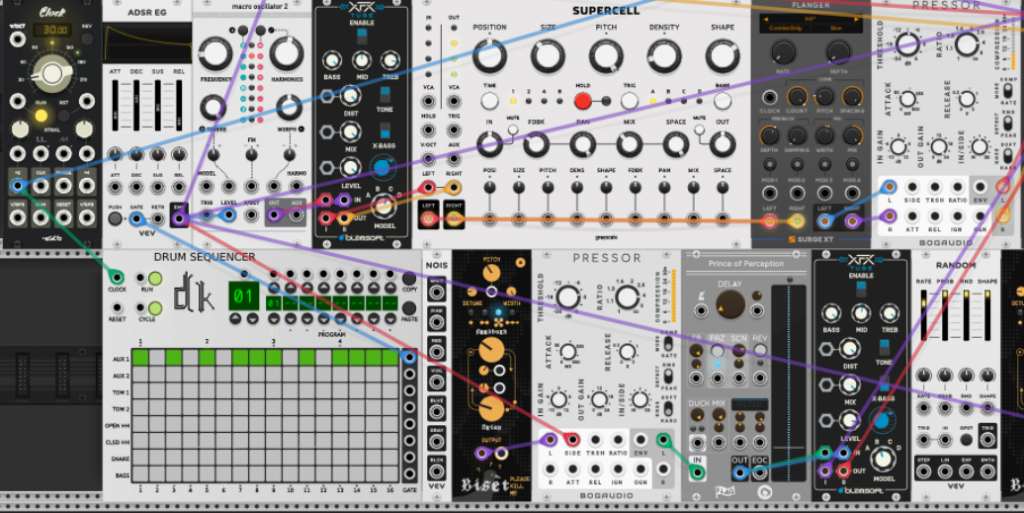
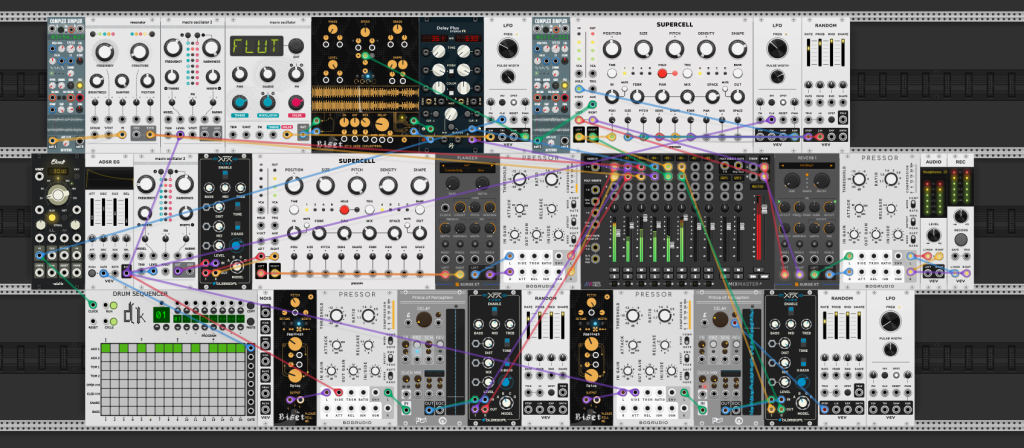
    I will briefly go over the functions of each part of the patch, though, to make itmore vivid what I plan for it to sound like.

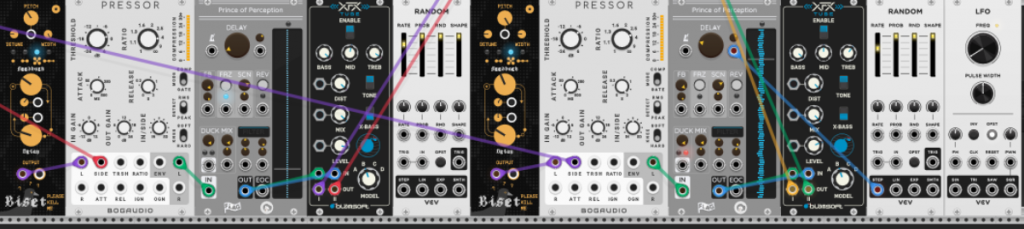
    This is a section for the 2 ‘noise’ oscillators, I’m using the clock output to sidechain the oscillators and control their levels better due to the volatile feedback on the funnily titled “PLEASE KILL ME” Biset Oscillators. I’m using these because of the feedback function, giving the sound a beautiful grit and analogue-feeling extra harmonic distortion. It is great for feedback emulation, which the Prince of Perception delay is also adding to. Prince of Perception is made for ultra-tight delay time synthesis, and automation of this parameter creates tonal stretching sounds and exciting feedback frequencies that can interact with the tones created from the oscillator. Both are being run through the XFX TUBE Distortion because it is the only distortion sound I like in VCV rack because of it’s Xtra-Bass setting which is extremely deep even without much distortion applied.

    This section running into the Macro Oscillator is the main ‘drum’ sound, which has a Drum Sequencer running into an ADSR to control its characteristics. The Drum is then being sent into the same distortion and into a Supercell module to give it a reverb and have more of a shimmery release that strangely gives it a metallic timbre. The Surge Flanger is used for the same reason, the extremely low Rate and Depth makes it obvious that I’m not using it traditionally, I’m using the Feedback Depth and Comb filter to use it as a Resonator, as most of the Resonators I’ve used in VCV rack are too tonal. This gives the ‘drum’ more physicality and abstraction from an otherwise boring deadened kick pattern.

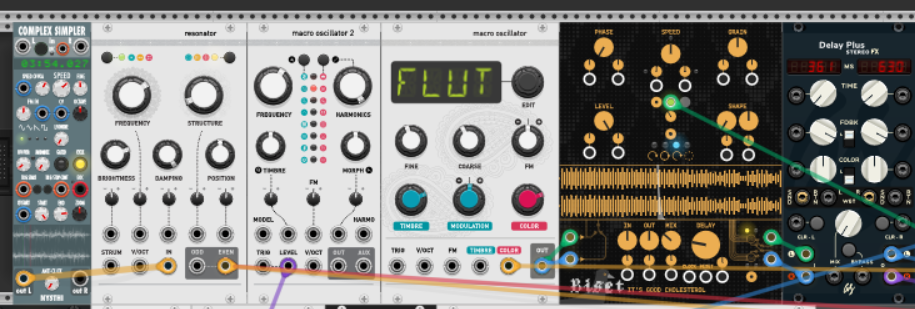
    Above is the more tonal sounds that can be brought in, the Complex Simpler playing a piano loop into a Quantised Harmonic String mode resonator, which I often use to ‘purify’ sound into pure sines. The Macro Oscillator is being used with an LFO to cycle through the Colour on the Flute mode as more feedback emulation, with the “IT’S GOOD CHOLESTEROL” being used for its dreamy pitch shift and bizarre digital stretching delay (with more delay included after to mask the stretching for development).

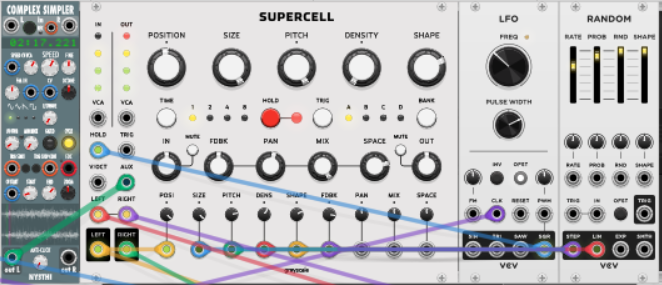
    Because the other elements are somewhat too fixed despite a lot of random automation and feedback, this is a Supercell patch running the master channel through its input, so that it creates chaotic feedback-heavy glitch noise interacting with the rest of the track, the Simpler is mostly there in case for development I want to replace the feedback in one ear with the loop.

  • Week 26

    For the past 2 weeks, I have had hearing issues that have rendered me basically unable to hear, which was obviously extremely depressing since I don’t do much other than music. Thankfully, after 2 appointments with a doctor, the issue was solved. I’m not wanting to go into the specifics since it is pretty gross, but thankfully, it was not caused by any noise-related damage and was reversible (and excitingly has solved some issues that I didn’t know were ongoing)! Because of this, and obviously not being able to engage with the sound piece at all during this period as per doctor’s orders of “taking it easy”. But now that we are back to normal, work can be continued!

    I recorded a proper take of the setup done last week straight into my tape deck with the gain pretty high this week, to get that ‘classic’ crunch and avoid the undesirable digital clipping characteristic. It took a couple takes to have the tracks develop how I’d like, and a few instances where the take is ruined by my laptop’s CPU overloading and gets near to crashing, but what is functioning now is with starting with ultra high pitch whine, adding more harmonics and building the track into drone, sending the clocked LFO to more parameters over time to slowly introduce the rhythmic element before fully bringing in the drum track. The performance is loose though and ‘live’, as is important to PE I think, and the structure this way shows three different styles of Power Electronics (ultra minimal high pitched focus, drone laden Industrial Noise, Power Noise / Industrial Beat led material) without being jarring or gimmicky in that regard.

    I recorded a vocal take, which was just sending these toy microphones from a kid’s karaoke machine through superfuzz, looper, pitch shift, delay and reverb into my amp back home, but because of the current situation with a new neighbour moving in I couldn’t have it so loud, and my vocals are more of the ‘half screaming’ variety with a lot of feedback. To be honest, I am not that happy with the take, but when next to the track, it sounds pretty exciting as a textural addition to hear how the feedback interacts with the pitches in the VCV rack recording. The track so far I really like as it is to be honest, but 17 minutes or so is quite overkill for the person marking, and I feel like with the high volume and high pitches I might come off as being obtuse, so changes I need to make next week is to trim the track down and add more elements of “atomised Power Electronics” as I mentioned last week, the only thing is I don’t know if I will be able to record vocals again like this, so sampling from elsewhere might be necessary.

    Thinking about what I am trying to achieve with this piece, I want to show both understanding of the genre and exciting deviation from its norms, applying character to it in a tasteful/funny way, and in all honesty I don’t have the heart to go all in writing mean spirited lyrics, so just screaming garbled nonsense at the moment feels right as it is. I am mainly worried about length and about if the loudness aspect is too ridiculous for an academic setting, but true to form of the genre ‘extremity’ is key, and demonstration of it is generally integral to showing understanding of the form (and characteristic loudness is something common within most of my stuff anyway). As it is now, it is extremely loud, and hopefully that will be appreciated.

  • Week 27

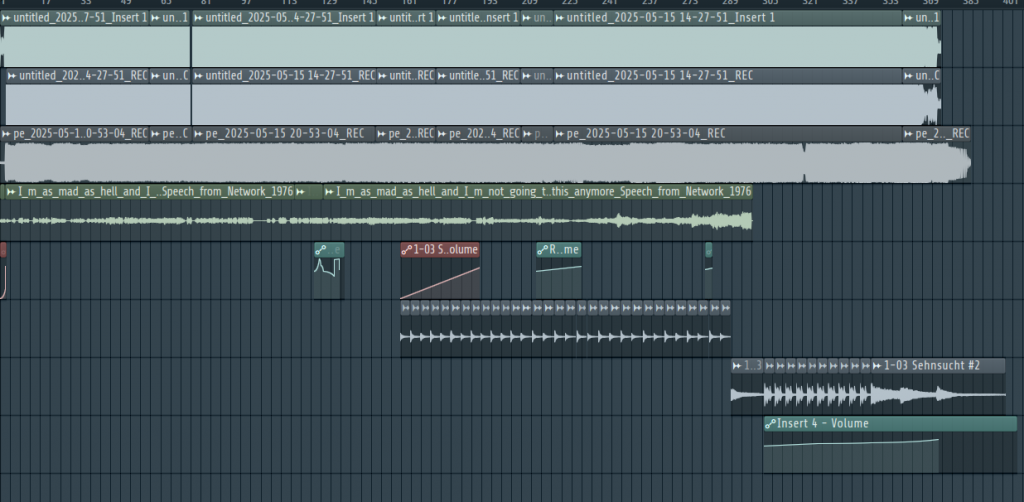
    Because of being more behind on this project more than I would like to have been, the final week of the project has been full of a lot of work as well. I took to trimming down the work to 12 minutes (which I guess is still maybe overkill, but it really works with the track I think, there is no specified maximum length for the track so I feel like this is generous, short tracks aren’t as fun), as well as structuring the work a little more through the use of adding some extra drones around the halfway point of the track using chords taken from the Greg Haines track “Sehnsucht” (yearning; wistful longing.)

    I think the contrast between the beautiful drones and the extremely harsh sound is an exciting use of the two sonic extremes, but is also a good deviation from Power Electronics traditions as it adds too much of a ‘musical’ element than is usually preferred. It also leans into my own interpretation of noise approaching the sublime, and in the written work relates to the use of ‘extremity’ in Power Electronics to force a reaction in this context through the use of sampling conventionally ‘sad’, ‘beautiful’ music. The contrast also relates to the genre’s focus on cruelty and victimisation; this way, something beautiful is being turned monstrous and violent sonically. But also, rather, the ‘extremity’ of the work I find enhances the beauty of the couple chords I sampled, the contrast between it and the constant aggression surrounding it is exciting. I also made the looping chords slightly off from the ‘beat’ in the track to appeal to my own love of the ‘primitivist’ side of the genre, where things are manually triggered and a bit shaky.

    Another addition I made to substitute for the fact I can’t re-record vocals is the famous rant from the 1976 film Network (which will never not be relevant), as it is sampled in quite a few Power Electronics records I’ve heard and I find it kind of iconic to include within my own track. It adds an extra layer of Power Electronics canonisation and another vocal layer of shouting, which is buried and stretched, which is something I like to do a lot with my work, as well as torn up with tape emulation to provide more grit and drop outs. It also is just generally a great speech and is enough to get a listener righteously angry, as Power Electronics (at least to me) tries to do with its samples.

    I didn’t add much automation since the priority is that it has ‘liveness’ and most elements were performed, but I added a couple of exciting moments with interaction between the sample and the noise takes, and raising the level of the vocal take I did towards the end for some more fun. I don’t usually like editing in FL studio because the cuts feel worse than in Audacity, but I gave it a go for the effects chains I wanted on the Master (I added a limiter because I don’t want to be too obtuse) and it actually went alright I feel like. The creation of a Power Electronics track after spending so long writing about it (and feeling like I was being extremely negative about it in the process) is exciting to practice some of the techniques I like listening to (I tried a rug pull at the start!) and make something more suited to my own personal tastes within Noise. I am extremely pleased with the track as well, I feel like it should be worth releasing in some form somewhere at some point and as a start of making Power Electronics, I feel like it is pretty effective in relation to the grander scheme of work.

  • Week 1 – Introduction To Sound Arts

    While becoming obsessed with exploring Drone and Noise genres of music, I started to find artists I enjoyed using the term “sound artist” over the usual “musician” categorisation – those being the likes of Francisco Merino (under the name Phroq), Joe Colley and Daniel Menche – who while still making what I would deem “noise music” their approach seemed to be more thoughtful and more concept based than the average full on in the red harsh noise I was listening to, incorporating more electro-acoustic and concrete elements with more of a compositional and more restrained structure. Further down the line I started to discover artists who focused more on creating smaller scale sounds, being particularly interested in the works of Steve Roden and Francisco Lopez who also used the term, who were making sounds on the complete opposite end of the spectrum, and creating music that was barely there at all.

    To me, this exposure to the term “sound art” has created a seperation between styles of experimental music, dividing more improvised and reckless approaches from more carefully composed and thoughtful ones. To me, this is not a division by genre, Harsh Noise or Drone can be sound art but that is not inherent, it depends on how the music sounds, how it is created and most importantly what the artist considers it to be. To me sound art implies a concept or intent, whether that being having an in depth meaning/connection to the real world the focus on the use/abuse of a piece of equipment, or the intent for the music to be used in an art gallery as an instillation.

    At the moment I would not consider what I make to be Sound Art, but my intent to study Sound Arts comes from a desire to take my music more seriously and following what I have heard the artists I have listed here doing, I would like to experiment more with extreme dynamics and psychedelic sound as well as finding out what I can do with instillation work.

  • Week 2 – Sound Arts Keywords

    Texture – What I think separates styles of “sound-arts” from music for most people is the emphasis on texture rather than traditional musical elements, the characteristics of a sound and how it has been abstracted or expanded on and what associations the listener has based on these sounds. It is also important to note how these textures feel for a listener, on whether the sounds come off as soft or harsh, comfortable or visceral, it will be making the listener feel something which is the entire point and it is integral to make sure that the sounds you are creating illicit a response.

    Space – The sense of space within Sound Arts is integral to the idea of the “soundscaping” concept, the music will have a sense of space even if the idea is not taken into account, and having an awareness of the space the sounds live in and bringing a sense of purpose to how it is treated can make for very effective music. When referring to space though, it is important to elaborate on what exactly it is in these terms; firstly referring to where sound exists within the stereo space of the music – which the manipulation of can make your music feel more alive and more interesting – as well as referring to the density of the sound, how much sound is packed in all at once and how these sounds interact (I personally like the term “ecology of sound”), and finally space can just mean the space that the recording sounds like it was made in, the interpreted level of intimacy between the performer and listener that is created from more raw recording styles and less amounts of editing.

    Structure – The structure of a piece contextualises the sounds within, whether that means relating to the dynamic range of the piece (whether it is active or stagnant), if it features distinct sections, has a more musical style of structure (building smaller sounds to a climax for example) or anything along these lines it is the structure that gives the music its format and the use of contrasting elements that gives the music more emotional resonance, and knowing how to build to those points and how to stay in those points without losing interest is what makes great art.

    Aesthetics – The aesthetics of the music can sometimes be more important than the sounds themselves, and the title and cover of an album will more often than not, not only determine whether they buy your music but also determine how they interpret it, finding associations with the sounds and the presentation. More obvious though, and more exclusive to sound arts, with instillation work the format is less exclusively a “sound work” and more-so a multimedia piece, how the sound fills the room and what room the sound is inhabiting makes the experience, not just the sound. A final note is this also applies to what the context of the music is, which some artists seem to emphasise more than others, whether or not their music is related to a historical event or something personal to them for example will shape how the listener thinks of the music, and creating art that is more vague can make the connection between the artist and listener more abstract, making the audience more difficult to please.

  • Week 7 – Longplayer

    Longplayer was concieved as a thousand year long composition that will play without repetition, with loops of singing bowls playing simultaneously but their positions never matching until a kind of “eclipse” event where after the thousand years have passed the positions will finally be all at their starting position. I use the word eclipse here because that was the analogy given to us when asking about how it worked, with us being told to think of the loops like planets, and having a visualiser that shows the loop position in circular bands that move like a solar system. The sound is then played into both the room it is installed in through speakers and broadcast online so that it can be heard anywhere.

    The nature of a thousand year piece has hopeful implications in that it expects for the piece to actually be able to be finished, but also the design of the piece is practical, both being played in the instillation space and online so that a listener can listen in person or via the internet, and in case anything does go wrong or the instillation needs to be relocated – because of the pre-determined nature of where the loops will be at any point in time, the piece can be started again as if nothing happened and also be performed with with live instrumentation.

    Speaking of the instillation space, the piece is installed inside an old experimental lighthouse used to test lights and repurposed to house this piece, which is played out of a set of speakers from a computer stored in a kind of shed. When we went to see the Longplayer, they were running a setup that was unintended, using a two speaker setup on the second floor, but I believe the sound was supposed to be coming from the very top of the lighthouse. The actual space the sound inhabits is a room filled with singing bowls, organised into semi circles I am assuming to continue the planetary theming. Their effect initially when I entered the room was me making the assumption that they were being used to make the sound live, and to be honest I was a bit dissapointed when I figured out they are decorative.

    I think to truely experience this piece I would have to attend a live performance in the future, the entire concept of this piece relies on extreme lengths of time so I feel like I should give it the time to visit while it is playing as normal and visiting in a few years time when there is a performance taking place. The entire idea of a piece being predetermined and written for such a long period of time creates interesting ideas as well of if say, the piece were to stop playing indefinitely both in a space and online, if that would even mark an end for it, as it has already been established where it will be and what it will sound like in every second until the year 3000. Really interesting piece from a very interesting person, very happy about getting to visit this.

  • Week 8 – Introduction to Electroacoustic Music

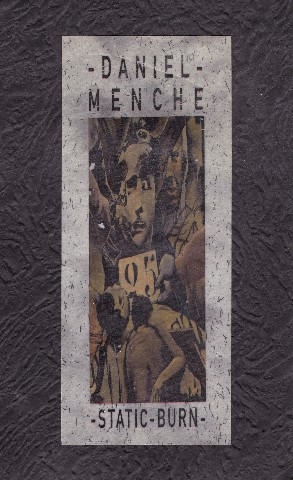
    Daniel Menche – Static Burn

    “Constructions created with crude analog and digital treatments of tortured electronics, destroyed voices, raw materials and one old forgotten song.”

    For this task, I decided I wanted to dig into one of my favourite Electroacoustic albums so that I already had that familiarity but can apply new ideas I learnt to, as well as giving myself a good excuse to listen to the remaster on Menche’s bandcamp. Daniel Menche is mostly recognised as a Noise artist because of his disregard of volume ideals and focus on intensity, but always had a distinctive style that seperated his work from his contemporaries at the time, as the 90s noise scene (especially the American scene) was known for being extremely full on “confrontational” noise all the time, whereas Menche’s work was focused on a different kind of expression entirely that used noise more as a catharsis for his passages of brooding dark ambient focused Electroacoustic landscapes that would flirt with noise ideals and conventions.

    (Menche on his 90s material from Andrew Lile’s blog)

    “My favorite “making” was my earliest work which was wildly exciting and fun but the actual recording creations are really not good at all. My earliest recordings are my least favorite but the making of them was my favorite because it was crude times for me. I had to make some crazy noise instruments from junk. And then all the grungy dirty noise that would happen. Fun times! Like as a kid playing in the mud. Now it’s playing in the digital clean bathtub.”

    I always found the dismissal of this early material puzzling to me because of course it is natural to think of the newest material as the best stuff you’re making and the oldest as the worst, but my personal preference has always leaned more towards the more primitive, really dirty feeling material, because it still holds the ideals of alienating and dissecting sounds that remain constant in his work, but in this more primitive work flow things feel more lifelike and organic, as well as having that really nasty brooding atmosphere and still having the excitement of the strange on-the-spot kind of curiosities I enjoy.

    I think that’s enough trying to justify why this one is my favourites, in regards to actually how this album sounds it is very focused on industrial and noise related sound sources, those being “junk sounds” such as the usual junk metal for gestures such as bowing, thrashing and scraping, small metallic objects for fumbling and tapping, as well as what I believe is a stone being dragged along pavement in Part 5, which has always been one of my favourite sounding tracks I have heard because of how unbelievably grimey the sound is. Other mainstay textures are the kind of high distortion sheet metal crashes and feedback wails which unusually never take forefront and moreso suppliment the dread, for example Part 6 starts with a Harsh Noise session which is slowly drowned in layers of lashing motions and reduces the feedback to a siren-like wail.

    Getting further away from particulars of each track, a standout element to me is the hissing static washes that linger in the background and march to the forefront, the sparse death industrial thuds that invade certain tracks, the droning ultra minimal ultra low bass which all create an extremely effective dead atmosphere for the sound to live in, even during more subdued passages. Why this sticks with me so much is because of the simplicity, that certain colours of noise and certain frequencies alone can make something feel so cold and scary. The use of radio on this too, using the static (as the title implies as the focus of this album) to create the industrial atmosphere, the soft reverb texture emulating shuffling motions, the complexity of the sound eventually overwhelming, but also in rare cases allowing for him to throw in samples of radio transmissions at will.

    Overall I am glad that I enjoyed this album still after however long it has been since I last heard it, it has always been a big influence on my music and I remember early experiments of mine being mostly trying to rip this off. I was scared I wouldn’t like it as much because my interest in dark ambient has mostly dropped off as of recent years, but when comparing this album to the tracks we were shown in class I felt like this would be a good opportunity to think about this album in more detail than I would prior, as I think of it definitely more as an electroacoustic album than a noise album.

  • Week 9 – Audio-vision and electronic innovation

    For this task I decided to use the opening scene of Persona (1966), which we did do in class but I had not seen the film before and wanted to watch the whole thing afer seeing this part in class, as I found it to be extremely impressive. The start of the scene focuses on the reel of film winding as a kind of deconstruction of the 4th wall, and the sound has an eerie, tense orchestral score rising until the sharp cut of sound as the light turns on and the film reel starts, all sounds being incredibly loud and jarring as to make the audience on edge. The sound design leaves no room for subtlety, as does the imagery, with the winding of the film reel being emphasised to an uncomfortable degree and making the animated film soundtrack feel claustrophobic, stretching this period of stillness in the cartoon out as to intensify the reeling sound and kill the stillness of the visual.

    The orchestral score returns as the visuals become cleaner but still being shown in a nightmarish flurry, never lingering on anything for long enough, showing an old silent film, a turanchala and the killing of a lamb, crescendoing at a violent thud of a nail through a hand which the sound of has an uncomfortably powerful impact. The religious themes of the killing of the lamb and the crucifixion bleed into the soundtrack, with serene church bells looping and fading out. The next scene focuses on people sleeping, zooming in on positions of hands and feet of different ages, and repeating a dripping sound that is non empathetic to the visuals, as the source is never made clear, with my intial thought being that it was relating sleep to death, as the reverb in the room has a very cold sound and the dripping has associations with blood dripping, as if they are on the all white bed for an autopsy.

    As well as this, this scene has a non empathetic sound of a phone ringing before the boy wakes up, which is not answered and is treated as if it never happened, as well as a phone not being shown in the room at all. There is also shuffling sounding like it is coming from another person inside the room, even though the visuals make it seem like they are in the room alone. The music then crescendos as there are huge images of women blurred and shown to cover an entire wall, with the boy stroking it, leading to the title screen.

    I think as well as this being an excellent way to start a film just because of the ideas and how it looks, the sound design of the first minute is such a punch in the face that it lulls the viewer into a hypnosis while the visuals slow down and enter a similar state. The mix of empathetic and non empathetic sound makes a strange kind of severe disconnect, and use of sounds tore from their sources to create a tension that is never relieved (for example, the use of a phone ringing would give the expectation that it will be answered). After seeing this introduction section for a few times disconnected from the rest of the film, I think it’s finally time to get started on the full thing.

←Previous Page
1 2 3 4 5
Next Page→
  • Accessibility Statement
  • Theme accessibility
  • Terms and Conditions